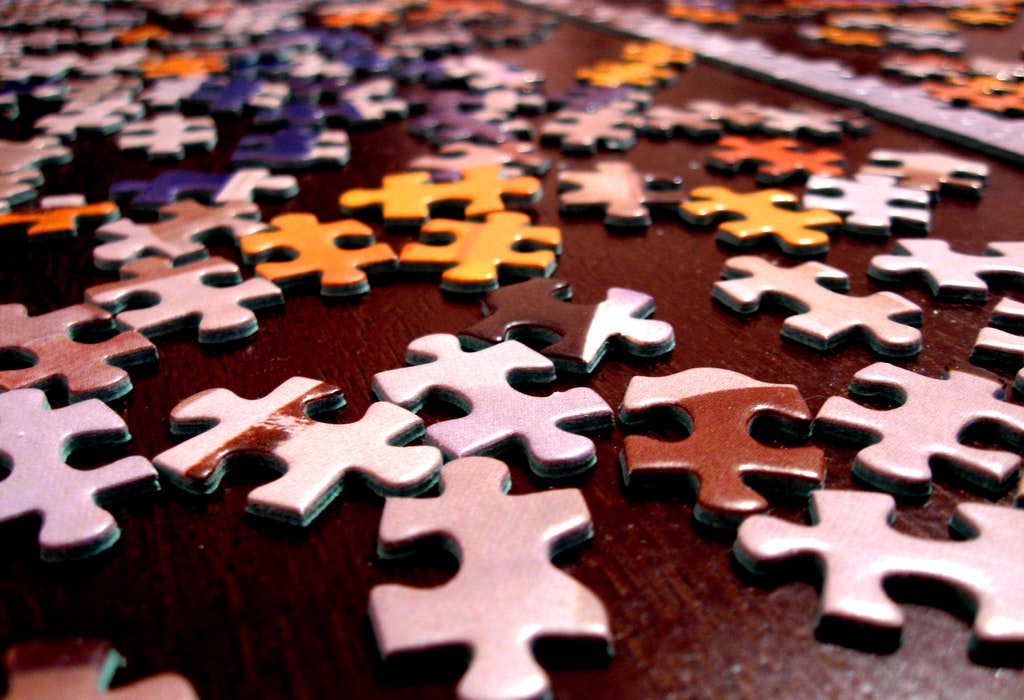
Not all puzzles are created equal. Some puzzles have play figures made of wood or plastic for free play. In general, the read this puzzle serves as the playing surface. The puzzle and figures stimulate the child’s imagination and invite them to think up stories to reenact. Some puzzles are a puzzle and a book in one. Children can browse, read stories and, if they feel like it, take the puzzle pieces out of the book then put them back in. Printable puzzle templates can be found online to color in, cut out and put back together. This also lets children practice using scissors, pencils and glue.
Where are HABA puzzles made and what materials are used?
pefc-logo.jpg
HABA puzzles for the littlest puzzle fans are made of wood and contain large puzzle pieces that babies and toddlers can easily grip with their little hands. Wood is one of the most natural and beautiful raw materials around. Our products made from wood have carried the PEFC seal since 2010. This confirms that we use wood from sustainable forestry. You can find more information at haba.de under “HABA on the outside means quality on the inside”.
When we bring color into wooden puzzles, we only use solvent-free, water-based paints and stains. This means that babies and toddlers can put all our wooden puzzles in their mouths at any time with no worries.
We make puzzles for toddlers and older children out of cardboard that is very robust thanks to compact pressing, enabling children to enjoy their puzzles for a long time. It’s also easy to print beautiful illustrations on cardboard puzzle pieces, stimulating children’s imaginations.
How safe are HABA puzzles?
img-einweichen-schablone-sicherheit.jpg
Like with all HABA products, the quality and safety of our puzzles is very important to us, and is monitored both by our in-house quality assurance and external testing. The mechanical safety tests are particularly important. Using template tests, we ensure that the elements of toddler puzzles are large enough that children under three cannot swallow them. Our wooden puzzles with grips also undergo a soaking test to ensure that the button grips do not come off. More detailed information about the quality and safety standards at HABA can be found in “Quality”.
Which other toys can help develop the fine motor skills and cognitive abilities of my child in the same way as puzzles?
As parents, you can train the cognitive abilities of your little one with age-appropriate toys such as pegging, stacking and sorting games. Suggestions can be found at HABA under “Cognitive development”. In addition to HABA wooden puzzles, the fine motor skills of your child can naturally also be encouraged with other wooden toys, for example with clutching toys or wooden building blocks. Learn more from HABA under “Fine motor skills & motor development”.
 Site Title